"Ask ChatGPT, and it completes tasks across Slack, Salesforce, and Notion." Workspace Agents, announced by OpenAI, turn this vision into reality. While ChatGPT previously served as an AI that "thinks within conversations," Workspace Agents mark a shift toward an AI that completes end-to-end tasks across enterprise SaaS.
The more organizations embrace digitalization, the more SaaS applications proliferate across departments (Slack, Salesforce, Notion, Google Workspace, Box, Asana, Jira, freee, and more). Workspace Agents fill the gaps between these SaaS silos. This article outlines custom implementation patterns to deploy Workspace Agents at production-grade reliability.
Why Workspace Agents are fundamentally new
ChatGPT previously supported integrations with external services through Custom GPTs, Connectors, and Actions. Here is how Workspace Agents differ fundamentally:
| Dimension | Custom GPTs / Actions | Workspace Agents |
|---|---|---|
| Launch | User manually selects a GPT | Required agents spin up automatically during chat |
| Integration | Aimed at single services | Designed to span multiple SaaS platforms |
| Authorization | OAuth tokens held per GPT | Workspace authorization infrastructure across tenants |
| Auditing | Logging is partial | Enterprise audit logging is standard |
| Multi-user | Primarily individual use | Provisioned by department or organization |
In short, Workspace Agents represent a transformation akin to rebranding ChatGPT from an era of personal prompt engineering into an era of enterprise business systems.
In parallel with Anthropic's initiatives described in Enterprise Adoption Guide for Claude Cowork (2026) — Post-April 9 GA Rollout Architecture and Client Support Patterns, OpenAI is making a serious entrance into enterprise operational workflows.
Overall architectural picture
The standard reference architecture we propose around Workspace Agents consists of the following four layers:
- Identity plane: SSO integration between enterprise IdPs (Okta / Azure AD) and Workspace
- Connector plane: Secure integrations with Slack, Salesforce, Notion, and Google Workspace
- Agent plane: Workspace Agent definitions organized by department and business role
- Audit plane: Centralized logging into SIEM detailing who performed what actions with each agent
The core principle is that agents are bound to business roles. Rather than catering to individual user preferences, agents are defined by functional roles (e.g., Level 1 Sales, Accounting, Talent Acquisition), and permissions shift automatically when organizational changes occur.
Three scenarios frequently encountered in custom projects
Scenario A: Sales agent (Salesforce + Slack + Outlook)
Projects where incoming leads trigger automatic registration in Salesforce, notify sales reps via Slack, and draft initial outreach emails in Outlook — all executed through a single instruction in ChatGPT.
- Timeline: 3 to 4 months
- Impact: Cuts initial sales response time from 1 hour to 5 minutes
- Caution: Designing Salesforce required fields such that agents cannot populate them is an anti-pattern
Scenario B: Recruiting agent (Notion + Google Workspace + Slack)
A recruiter says, "Summarize candidate statuses for this week and schedule interviews," and the agent reads the candidate database in Notion, checks interviewers' Google Calendars, and sends scheduling links via Slack.
- Timeline: 2 to 3 months
- Impact: Cuts recruiting coordinator workloads in half
- Caution: Finalize masking designs for candidate personal information first
Scenario C: Accounting and general affairs agent (freee + Box + Slack)
Projects that execute instructions like "List all pending expense reimbursement approvals from last month and send reminder messages on Slack" in a single message.
Following the principles outlined in Rebuilding Customer Touchpoints with Multimodal AI and MCP — Next-Generation Customer Support Architecture for Custom Projects (2026), the same philosophy extends naturally to back-office workflows.
Implementation steps (4 phases)
| Phase | Period | Objective |
|---|---|---|
| 1. SaaS inventory + role definitions | 2–3 weeks | Map permissions across business roles and SaaS platforms |
| 2. Pilot with 1 department + 1 agent | 4–6 weeks | Validate effectiveness with a single Workspace Agent |
| 3. Broader rollout + IdP integration | 2–3 months | Expand department count and integrate with SSO |
| 4. Auditing + cost optimization | Ongoing | Integrate with SIEM and visualize usage logs |
Crucially, determining role-based permission boundaries in Phase 1 dictates whether the project succeeds. Launching with an "everyone can access everything" posture invariably leads to halts within six months due to data leak risks.
5 common pitfalls
1. Upstream SaaS API rate limits
Agents trigger API requests at a volume far higher than humans. Because projects will hit rate limits on Salesforce, Notion, and Google APIs early on, incorporate retry and caching strategies from day one.
2. Insufficient separation of read and write permissions
Starting with read-only agents and gradually enabling write permissions is the safest approach. Granting write privileges from the beginning causes the blast radius of any erroneous operation to expand dramatically.
3. Timing of authorization updates
Failing to revoke departing employees' permissions immediately will inevitably raise red flags in audits. Design systems from the start so that group updates in the IdP propagate to Workspace Agents within one hour.
4. Inconsistent log formats
Disparate log formats across agents prevent effective cross-correlation in SIEMs. Establish a common schema at the outset.
5. Placement of final human approvals
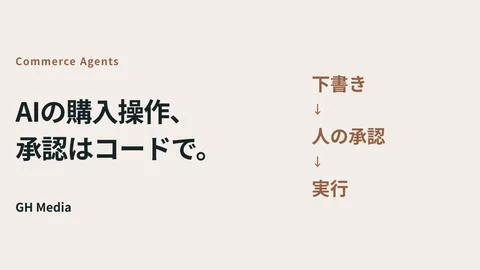
Identify upfront the critical touchpoints requiring human approval, such as sending emails, disbursing funds, or executing contracts. Over-automating an agent and subsequently having to roll it back is the quickest way to lose user trust on the ground.
The production engineering patterns detailed in Building Production-Grade Agents with OpenAI Agents SDK v2 Sandbox and Memory Controls apply just as effectively to Workspace Agents.
Comparison with competing stacks
| Competitor | Relationship with Workspace Agents |
|---|---|
| Microsoft Copilot for Microsoft 365 | Strong for Microsoft 365-centric organizations; weaker on Salesforce integration |
| Google Workspace Intelligence | Strong for Google-centric organizations; external SaaS integrations are still maturing |
| Anthropic Cowork | Excels at desktop-centric tasks; ChatGPT holds the edge for cross-cutting web SaaS |
In our client engagements, an increasing number of reports indicate that a hybrid approach — using Copilot for email and Office tasks while leveraging ChatGPT Workspace Agents across third-party SaaS — delivers the best user experience.
Starting with a single department
When rolling out Workspace Agents, validating results with one department and one agent before expanding makes it far easier to secure internal approval and buy-in on the ground than aiming for an immediate company-wide deployment. As illustrated in the implementation phases table (SaaS inventory + role definitions → pilot → broader rollout + IdP integration → auditing), the approach and scope will vary depending on the number of SaaS tools, target APIs, and audit requirements.
Summary — from conversational AI to task-completing AI
Workspace Agents represent a clear shift for ChatGPT from an AI that thinks through conversation to an AI that finishes business tasks. In Japanese enterprises where SaaS sprawl is common, the value of bridging these silos is enormous and translates directly into workplace productivity.
Even when using Workspace Agents, the suite of connected SaaS platforms, the division of roles and permission boundaries, the scope of write access, and the placement of human approval checkpoints differ entirely for each company. Consequently, the approach and scale must be tailored step by step. If you are considering specific questions such as "Which department and workflow should pilot Workspace Agents first?" or "How should we design permissions when bridging Salesforce and Slack with AI?", please contact us via our contact form with details about your current SaaS landscape and key challenges.