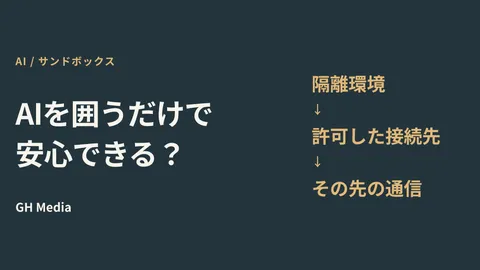
On May 27, 2026, InfoQ reported Azure Logic Apps Adds Sandboxed Code Interpreters to Agent Workflows (InfoQ, 2026-05-27). Microsoft added sandboxed code interpreters to Azure Logic Apps, allowing agents within integration workflows to generate and execute Python, JavaScript, C#, and PowerShell in Hyper-V isolated sessions. Architects gain granular control over models and execution, running generated code within protected boundaries. We view this not merely as an incremental feature, but as a watershed moment enabling AI to be safely inserted into enterprise automation flows. Having agents execute arbitrary code was historically the single greatest concern for the IT team; having that isolation natively built into an iPaaS carries profound significance.
We provide custom development across AI implementation, enterprise system integration, and client web development for small-to-mid-sized businesses. From our perspective delivering client services that embed AI agents into iPaaS (Azure Logic Apps, etc.) to safely automate existing operations spanning ERP, SaaS, email, and approvals, this article outlines how to translate this announcement into practical execution. Overall architectural design for integrating agents into enterprise systems is covered in our client integration of AI agents into enterprise systems with Mastra, while interface design for agents interacting with existing systems is also discussed in design patterns for converting existing APIs into MCP servers.
Why sandboxed execution is a watershed moment
Traditional automation followed pre-scripted steps. Agent workflows evaluate situations dynamically, generating and executing code on demand. The bottleneck for the latter was always safety, but code interpreters backed by Hyper-V isolation have significantly lowered that barrier.
| Dimension | Traditional no-code flows / RPA | Sandboxed agent workflows |
|---|---|---|
| Flexibility | Predefined branches only; halts on unexpected exceptions | Adapts dynamically by generating and executing code |
| Security (isolation) | Scripts execute directly with workflow credentials | Executes in Hyper-V isolated sessions, segregating trust boundaries |
| Observability | Execution logs exist, but intent cannot be traced | Generated code, inputs, outputs, and execution results are auditable |
| Maintainability | UI/GUI dependent, easily becoming reliant on specific individuals | High reproducibility via code and IaC |
| Applicable business scope | Primarily routine, structured data | Expands to semi-structured/unstructured data and discretionary judgments |
The key takeaway is that isolation mitigates the classic trade-off where increasing flexibility reduces security. The primary reason the IT team refused to approve AI automation was that "nobody could know what code would run in advance." With isolated execution environments and complete audit logs, that equation fundamentally changes.
Three structural changes beneficial to custom development projects
Structure 1: From fixed flows to agent-evaluated flows
Previously, teams gathered requirements and diagrammed every single conditional branch. Moving forward, architects design clear division of labor: "agents handle evaluation, sandboxes handle execution, and humans handle approval and commitment." The value of custom development lies in drawing the line between what is delegated to agents and where human approval gates are placed. Building evaluation logic draws foundational concepts from our client architectural design for AI agent integration into business systems.
Structure 2: From rogue scripts to isolated execution and auditing
Workplaces are filled with scattered Excel macros and personal PowerShell scripts. Consolidating these into Logic Apps sandboxed execution creates complete records of who ran what code and when, simultaneously resolving both key-person dependencies and governance deficits. The connectivity layer for safely invoking legacy assets from agents follows the same principles found in our design patterns for converting existing APIs into MCP servers.
Structure 3: From one-off automation to continuous operation
Because agents exercise discretion, their behavior shifts as business context and data change. Rather than "build and abandon," solutions require continuous operational tuning that monitors accuracy, costs, and exceptions. Managing persistence for memory and context links to issues explored in our client integration of persistent agent memory into enterprise systems, moving the primary frontier of custom development from initial construction to ongoing operation.
The 5 phases of our client AI business automation (iPaaS × agents)
Phase 1: Current-state assessment
- Inventorying target department workflows and visualizing manual tasks, data re-entry, and approval wait times
- Selecting automation candidates (scoring across frequency × labor hours × ease of standardization)
- Auditing data locations (M365, core ERP, SaaS) and access permissions
Phase 2: PoC
- Prototyping agent workflows across 1–2 candidate processes
- Validating sandboxed code generation and execution within a contained scope
- Initial benchmarking of accuracy, exception rates, and execution costs
Phase 3: Design
- Architecting the end-to-end design connecting Logic Apps, agents, and connectors (M365, SaaS, core ERP)
- Designing sandbox permissions, execution boundaries, and audit logging
- Defining guardrails (prohibited actions, approval gates, execution limits)
Phase 4: Build and deployment
- Constructing production workflows and integrating human approval gates
- Reproducible deployment via IaC (Bicep / ARM)
- Phased company-wide rollout with error fallback mechanisms
Phase 5: Operational review (ongoing)
- Monthly reviews of accuracy, costs, exceptions, and audit logs
- Tuning prompts, guardrails, and target workflow scopes
- Phased expansion of automated scopes and re-evaluating business impact
Standard technology stack set for custom development
| Layer | Recommendation | Alternative |
|---|---|---|
| iPaaS | Azure Logic Apps(Standard) | Power Automate (for lightweight use cases) |
| Agent / LLM | Azure OpenAI Service | Managed LLMs on other clouds |
| Code sandbox | Logic Apps sandbox (Hyper-V isolation) | Self-hosted container-isolated runtime |
| Connectors | Connectors for M365, Dataverse, and core ERP APIs | Custom connectors and MCP server conversions |
| Observability and auditing | Azure Monitor / Application Insights | Centralized logging infrastructure + audit archive |
| Identity and access management | Microsoft Entra ID (least privilege) | Integration with existing IdPs |
When existing internal APIs need to be accessed from agents, inserting an intermediary connection layer rather than forcing direct connections is much safer, following the architecture outlined in design patterns for converting existing APIs into MCP servers.
Which projects need this and which do not
| Suitable projects | Projects to decline |
|---|---|
| Already utilizing Microsoft 365 / Azure in daily operations | Dominated by unstandardized, person-dependent tasks where foundational assumptions collapse |
| Heavy cross-departmental data re-entry and long confirmation bottlenecks | Processes with extremely low execution frequencies |
| Need automation while enforcing strict auditability and governance controls | Workflows where code and logs cannot (or must not) be recorded |
| Seeking efficiency in semi-structured workflows requiring discretionary handling | Fully routine tasks already handled adequately by existing RPA |
We decline projects driven merely by "wanting AI for the sake of AI" right at the outset. The deciding factor is whether there is sufficient workflow volume to justify automation ROI.
Six clauses to include in client contracts
| Clause | Details | What the client should verify |
|---|---|---|
| Scope and decision boundaries | Explicitly defining decisions delegated to agents versus scopes requiring human approval | Boundaries defining "how far actions can be committed automatically" |
| Sandbox privileges | Ceilings on permissible operations and reachable network/data resources | Ensuring no excessive permissions are granted |
| Auditing and log retention | Recording generated code, inputs, outputs, and execution results, along with retention periods | Compliance with audit mandates and statutory retention years |
| Data handling | Usage for model training, storage locations, and cross-border data transfers | Handling of personal information and sensitive data |
| Costs and usage-based billing | Caps and alerts for execution fees and token billing | Monthly spending caps and alert notifications |
| Operations and SLAs | Incident response, adjustment cadence, and offboarding handoffs | Vendor lock-in and migration paths |
In particular, we recommend codifying sandbox permissions and audit logs in your contracts rather than relying on verbal agreements, as these are critical concerns unique to AI automation.
Client-side ROI estimate
| Metric | Projected improvements |
|---|---|
| Manual effort reduction | 40 to 120 hours saved per month in target operations |
| Error rate reduction | 50% to 80% reduction in transcription and verification errors |
| Processing lead time reduction | Time spent waiting for approvals and transcription cut by 1/2 to 1/3 |
| Elimination of person-dependent silos | Consolidation of rogue scripts to eliminate dependency on specific staff |
For example, eliminating 80 hours of manual labor per month translates to an estimated impact of 240,000 yen per month, assuming a labor cost of 3,000 yen per hour for the target operations. For the Standard plan (300,000 to 700,000 yen per month), bundling multiple operational workflows provides a realistic benchmark for recovering the investment in about six months to one year. Because actual effort and savings vary by business process, figures must always be recalculated using measurements from a PoC.
Five common pitfalls
Pitfall 1: Attempting to automate every process at once
Expanding scope too quickly undermines both accuracy and governance. Start with one or two workflows where frequency × workload is highest.
Pitfall 2: Failing to restrict sandbox permissions
Granting broad permissions just to "get things running" compromises isolation. Establish least-privilege access and reachable resource limits from the start.
Pitfall 3: Postponing observability and audit logging
Without tracking generated code and execution outcomes, you can neither troubleshoot incidents nor fulfill accountability requirements. Making audit logging part of initial architecture is an ironclad rule.
Pitfall 4: Bypassing human approval gates
Handing all decision-making over to agents allows erroneous actions to reach production instantly. Place an approval step before any state-committing actions.
Pitfall 5: Underestimating costs (execution fees and tokens)
Agent run counts can surge depending on operational conditions. Configure spending caps and cost alerts to make monthly variance visible.
90-day action plan
| Week | Action |
|---|---|
| 1–2 weeks | Operational inventory and automation candidate scoring for target departments |
| Weeks 3–4 | Data location and permission cataloging, finalization of PoC candidate processes |
| Weeks 5–7 | PoC implementation (sandbox execution, exception tracking, cost projections) |
| Weeks 8–9 | End-to-end architecture (connectors, permissions, audits, guardrails) |
| Weeks 10–11 | Production workflow implementation, approval gates, and IaC provisioning |
| Weeks 12–13 | Phased rollout, impact tracking, and establishment of operational review practices |
Conclusion
The sandboxed code interpreter in Azure Logic Apps addresses "safe execution of arbitrary code" directly within iPaaS, overcoming the final major hurdle in AI automation. This allows organizations to build practical governance structures that divide responsibilities clearly: agents handle analysis, sandboxes handle execution, and humans commit final actions. However, achieving tangible value depends heavily on careful process selection, permission and audit architecture, and ongoing operations. We provide end-to-end custom development services spanning initial assessments, PoCs, architecture and implementation, through to operational reviews. If you would like to bounce ideas around about where to begin automating your business operations, feel free to reach out via our contact form.
Sources
- Azure Logic Apps Adds Sandboxed Code Interpreters to Agent Workflows(InfoQ 2026-05-27)
- Custom development for integrating AI agents into enterprise systems with Mastra
- Design patterns for turning existing APIs into MCP servers
- Custom development powering enterprise systems with Cloudflare Agent Memory