"We built an internal AI agent prototype and it worked smarter than expected. Now we want to deploy it to production operations"—more companies are smoothly progressing to this point. Yet at the very next step, most hit an impasse. The prototype merely ran on an engineer's laptop; deploying it company-wide suddenly raises a barrage of questions: where to run it, whether users must wait through multi-minute tasks, and how to securely connect to internal databases and tools. Verification of intelligence is complete, yet progress stalls at the doorstep of production. This is the current reality of AI agent adoption.
As a move to lower these hurdles to production deployment, on July 7, 2026, Google added new features to Gemini API Managed Agents. A managed approach delegates execution environments and tool integration to the provider's cloud infrastructure rather than maintaining them internally. After reviewing what has become feasible with this update, we explore the primary fork in the road when evaluating custom development: whether to build in-house infrastructure or leverage managed services.
What is a managed agent in the first place?
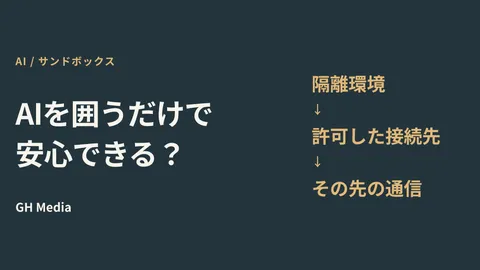
Google Managed Agents is an architecture introduced at Google I/O 2026. By calling a single API endpoint, developers let Gemini handle inference, code execution, necessary software installations, file operations, and web access within an isolated cloud sandbox. The core benefit is that your company does not need to build or operate this execution environment. It is best understood as renting a secure container in which agents can operate.
Replicating this internally requires significant engineering: secure code execution sandboxes, background task runners to avoid blocking users, connectors to internal tools, and permission governance. Managed agents provide that foundation off the shelf, allowing you to focus on your core objective: determining what workflows to automate and how.
Three updates that brought managed agents closer to enterprise readiness
Among the announced features, three are especially impactful for operational integration:
| Added feature | Operational significance |
|---|---|
| Background execution | Runs multi-minute jobs asynchronously and notifies upon completion |
| Remote MCP integration | Connects directly from the cloud to internal tools and databases |
| Automatic credential renewal | Prevents long-running jobs from failing due to expired tokens |
The first, background execution, allows processes to run asynchronously on the server side by specifying background: true. Users no longer need to maintain an open connection while waiting for results; they can initiate a task, track progress, and receive a notification upon completion. This is ideal for tasks such as batch invoice processing or large-scale document summarization—tasks that take time but do not require human supervision.
The second, remote MCP integration, enables cloud-hosted agents to connect directly to internal tools like document management, issue trackers, and databases without engineering custom tunnels or proxies. MCP (Model Context Protocol) is the open standard connecting AI models with external tools; its foundations are covered in our Complete MCP Guide, and building custom MCP servers is detailed in how to build a custom MCP server. A prototype only becomes a business system when agents can interact with actual operational data.
The third, automatic credential renewal, is subtle yet vital. It prevents production failures caused by authentication tokens expiring mid-execution during long-running tasks. Furthermore, it refreshes tokens without arbitrarily expanding scope, ensuring fail-safe security.

Choosing between custom builds and managed architectures
How should you proceed with business automation in your organization? The decision hinges on whether your requirements fit within the boundaries of the rented environment.
Managed agents are suited for cases where data may transit through provider clouds and standard tool integrations suffice. Because you are freed from building and operating infrastructure, launch times are rapid and small teams can easily manage operations. Most SMB internal automations fall neatly into this category.
Conversely, if sensitive data cannot leave your on-premises infrastructure, or if you have specialized execution environments and unique network requirements, you should consider custom in-house builds or enterprise architectures offering granular control. This is not a matter of managed platforms being newer or inherently superior. Data location and requirement uniqueness dictate the choice. This broader "build vs. borrow" calculus aligns with the framework discussed in evaluating in-house vs. outsourced and custom vs. off-the-shelf business systems.
The crucial takeaway is not to pause at validating model capability (prototyping); define early on where the system will run in production and which data sources it must connect to. Leaving these requirements ambiguous while expanding a prototype will inevitably force a complete rewrite during production rollout.
Start by defining production requirements in plain language
Where AI agent implementations stumble is rarely model intelligence, but rather the architectural design for production. The evolution of managed agents makes it possible to adopt ready-made execution environments and internal tool connectors, accelerating paths to production-grade implementations. Nonetheless, the chosen approach depends on data residency and requirement uniqueness.
The first step is not generating flashy prototypes, but writing down on a single page which workflows you intend to run in production, which data sources they will connect to, and where they will execute. Once defined, whether managed services suffice or custom engineering is required will become clear on its own.
If you want to integrate AI agents into your business operations with production-grade quality, or find yourself stuck moving from prototype to production architecture, reach out via GleamHub's development, AI, and automation consultation. From articulating production requirements and evaluating managed vs. custom builds to designing secure integrations with internal tools, we partner with you to support your operational needs.