"When we counted our cloud services, we had fifteen. Each one has its own ID and password, and every time someone joins or leaves, we manually add or delete them across the board. The other day, we discovered two active accounts belonging to people who had already left... We can no longer keep track of who has access to what."—This was a concern we recently received from a staff member handling dual IT duties at a company of about forty employees.
Accounting, attendance, chat, business card management, sales CRM, expense reimbursement—using dedicated SaaS tools for distinct business functions has become standard practice even for SMBs. While convenient, having separate IDs and passwords attached to each tool and manually provisioning or deprovisioning accounts during employee turnover has reached its breaking point. Password reuse, orphaned accounts of former employees, and unmonitored access permissions quietly but surely inflate the risk of data leaks. In this article, we explain how to centralize login management using Single Sign-On (SSO) with Google Workspace as the identity provider (IdP).
Why separate IDs for each SaaS are dangerous
The root of the issue is that user identities exist in silos across individual services. This gives rise to multiple risks.
Password reuse: As services multiply, employees cannot remember them all and end up reusing the same passwords. If one leaks, others fall like dominoes, making this a leading cause of account takeovers (as covered in our passkeys and two-step verification article).
Orphaned accounts from former employees: Companies rush to set up all accounts during onboarding, but during offboarding, situations arise where the primary email was disabled while an obscure SaaS remained active. Forgotten accounts act as backdoor entry points for former employees from outside the organization.
Invisible access permissions: It becomes impossible to maintain a centralized view of who has access to which service with what role. When admin consoles are scattered across fifteen different platforms, conducting an audit is practically impossible.
SSO solves these challenges at their root by bundling fragmented credentials into a single identity platform.
What are SSO and IdP? The concept of a single entryway
An IdP (Identity Provider) is a platform that centrally manages employee identities (IDs) and issues authentications to each service confirming that "this user is verified." SSO (Single Sign-On) is a framework where logging in once to that IdP grants access to connected SaaS platforms without entering separate passwords. Technically, SaaS and IdP are linked using standard protocols such as SAML or OIDC.
For SMBs, the most practical approach is leveraging their existing Google Workspace as an IdP. Many SaaS solutions support "Sign in with Google" or SAML integrations. By making Google Workspace accounts the primary entry point, you can start centralizing access without purchasing a new identity management platform. Employees access every service by logging into Google, and administrators can revoke access across all connected platforms simply by suspending a single Google account—eliminating onboarding friction and offboarding oversights simultaneously. Onboarding standardization connects directly to our account provisioning and onboarding article, while offboarding links to our account offboarding article.
| Individual ID per SaaS | Google IdP+SSO | |
|---|---|---|
| Login | Separate password per service | Log in once to access each service |
| Offboarding | Manual deletion per service | Suspending Google blocks connected services too |
| Auditing | Scattered admin consoles make audits impossible | Single entry point enables auditing |
| Authentication hardening | Inconsistent across services | 2-Step Verification can be enforced uniformly at the entry point |
The key to custom development: Beyond SSO to inventory and provisioning
Treating SSO merely as a tool to simplify logins falls short. Its true value lies in centrally managing the entire account lifecycle.
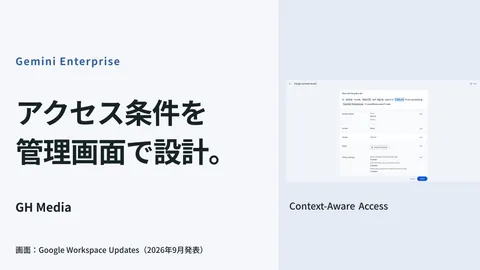
The prerequisite is inventorying your current SaaS tools and user accounts. Identifying what is in use, who has access, and which rogue (unmanaged) contracts exist is necessary before SSO architecture can begin. Next, combining SSO with automated provisioning ensures that the moment a user is created or suspended in Google, their account in the linked SaaS is automatically created or suspended. Only when reaching this stage do you achieve true seamlessness: accounts work upon joining and vanish upon departure. Furthermore, enforcing 2-Step Verification and access controls (Context-Aware Access article) at the primary entry point elevates authentication security across all SaaS tools at once. In custom development, the key is implementing this sequence—inventory → SSO → provisioning → authentication hardening—step-by-step without disrupting daily business.
Case study: A company that consolidated fifteen SaaS tools under a single Google login
Here is a concrete example. We received a consultation from a company (name withheld) that, like the opening case, operated over fifteen SaaS tools with individual IDs and had discovered lingering accounts from departed employees. Auditing all SaaS tools and accounts revealed several paid services that no one was using and multiple active accounts belonging to past workers.
Based on usage frequency and compatibility, we prioritized services capable of SAML or Google integration, consolidating ten major platforms under Google Workspace SSO. Where supported, we set up automated provisioning so that suspending a Google account automatically deactivates access to linked services. We also enforced 2-Step Verification at the entry point. As a result, employee logins were simplified to just logging into Google, offboarding was centralized into one place, and forgotten accounts vanished. What worked was less the integration itself than conducting an inventory first to determine what should be consolidated.
Do not integrate every SaaS at once; start with an inventory and the top three services
A word of caution regarding sequencing: attempting to connect all fifteen platforms via SSO at once often runs into roadblocks with incompatible services or edge-case operations, leading to stalled projects. You should first inventory your SaaS tools and accounts, and then integrate a few frequently used, SAML/Google-compatible primary services. Once your organization experiences the benefits of a unified entry point, gradually integrate remaining compatible services and layer on automated provisioning and hardened authentication. This order centralizes login management securely without large capital investments or operational disruption.
If you are overwhelmed by SaaS proliferation, worried about missing accounts during offboarding, or eager to eliminate password reuse, please feel free to reach out through GleamHub's free IT and system development consultation. From SaaS auditing and Google Workspace IdP SSO design to automated provisioning and authentication hardening, we will partner with you to achieve consolidation within a manageable scope.
Sources
- Set up a SAML app with Google Workspace as identity provider - Google Workspace Admin Help
- About Automated User Provisioning - Google Workspace Admin Help
- Set up single sign-on (SSO) for your organization | Google Workspace Admin Help
- Google Workspace Security Settings Review Guide 2026 | CloudNative BLOGs