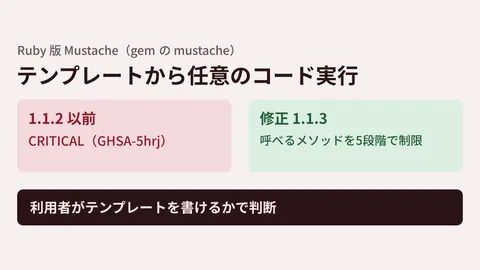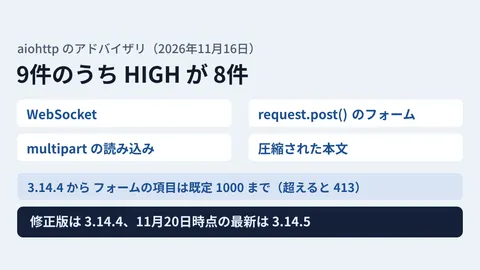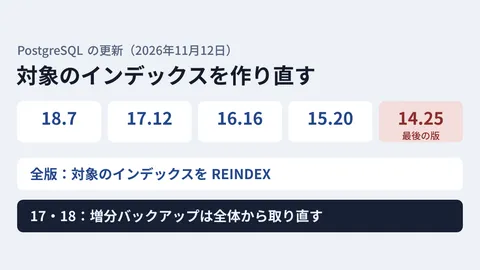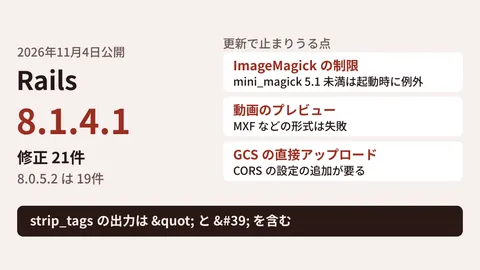
When maintaining a business system, have you decided how quickly you will apply a fix when one is released for an open source component you depend on? If your rule is "in the next scheduled update," that interval may turn out to be longer than the time until clues for an attack are made public.
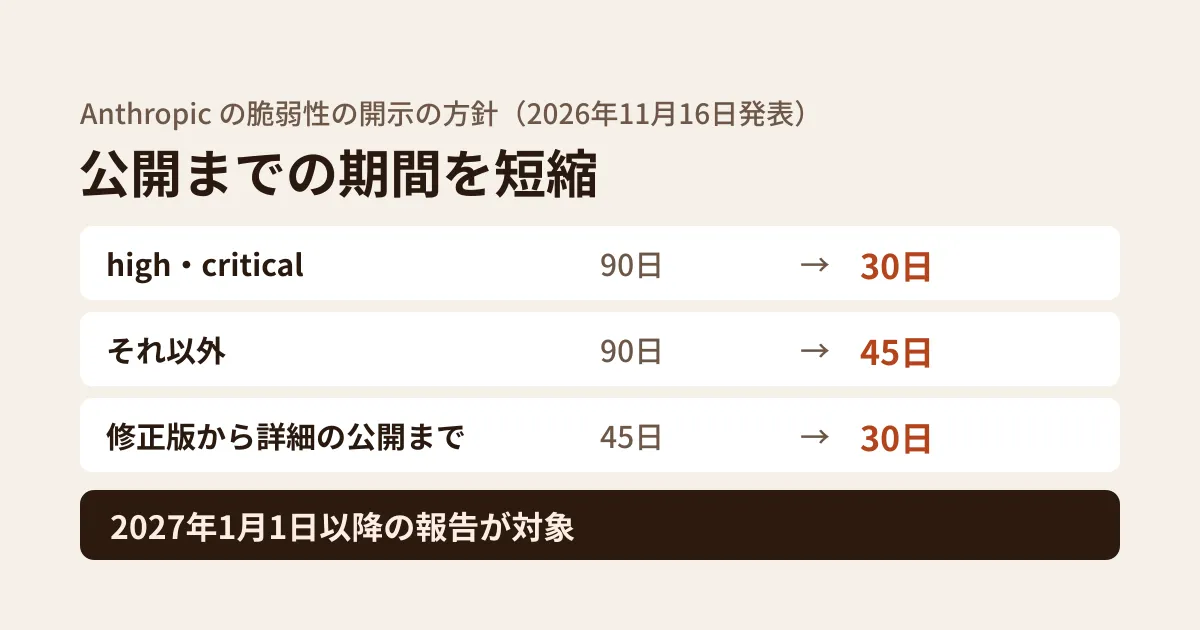
On November 16, 2026, Anthropic announced that it is revising its policy for disclosing vulnerabilities found using Claude (coordinated vulnerability disclosure, or CVD) and shortening the time before disclosure. The reasons given are that AI is finding vulnerabilities faster and that the rate at which someone else finds the same vulnerability (rediscovery) is also rising. In this article, we compare the original announcement with the current policy page to confirm what changes, and lay out what maintainers should revisit.
What changes
The changes in the announcement ("Updating our coordinated vulnerability disclosure policy timelines") are as follows. They cover vulnerabilities that Anthropic finds in open source software and in non-public software it has permission to test. Reports from outside researchers to Anthropic are covered by a separate policy.
| Item | Current policy (updated March 6, 2026) | Reports on or after January 1, 2027 |
|---|---|---|
| Time to disclosure (high and critical severity) | 90 days | 30 days |
| Time to disclosure (all others) | 90 days | 45 days |
| Time before escalating to an external coordinator when the vendor does not respond | 30 days | 15 days |
| Time from fix release to publication of technical details (as a rule) | 45 days | 30 days |
| Vulnerabilities confirmed as exploited | 7 days | 7 days (unchanged) |
Under the current policy, information is disclosed 90 days after the report or when a fix is released, whichever comes first, and only the technical details wait 45 days after the fix. If the vendor is making progress on a fix as the 90 days approach, a 14-day extension is possible. The policy also says the 45 days after the fix is a general rule: it may be shortened when the details are already known through other channels, and extended when rolling out the fix is especially difficult.
The last row of the table is described differently depending on the source. The announcement says "the 7-day disclosure window for exploited vulnerabilities does not change," while the current policy says "for critical vulnerabilities being exploited, the target is 7 days to a fix or mitigation" (with a further 7-day extension possible if the vendor is making progress on a fix).
The new timelines apply to issues reported to vendors and maintainers on or after January 1, 2027. Reports already in progress at that point keep their original deadlines.
In addition, for high-severity vulnerabilities that are already past the 90-day deadline but have not yet been disclosed, Anthropic says it has notified maintainers of an additional 30-day grace period. After that, it plans to publish the reports on its dashboard under the new policy starting January 1, 2027.
Exceptions are also described. Software that is hard to deliver updates to, such as critical infrastructure, and issues that require changes to specifications or RFCs may not be fixable within 30 or 45 days, so deadlines are set individually with the vendor. The new policy also does not apply to AI findings that have not been reviewed by a person (such as those sent by the free scanning service "OSS Scanner").
What it means for maintainers
From a user's perspective, the row that matters is the second to last in the table: the time from a fix's release to the publication of technical details becomes 30 days. The current policy explains the purpose of this period as "to give downstream users time to deploy the fix before detailed exploitation information is published." Although this applies only to vulnerabilities Anthropic finds, adopting "apply fixes within 30 days of release" as a guideline for high-severity issues keeps you within this window.
The announcement says AI is increasing the rate of rediscovery. Other researchers or attackers may find the same vulnerability independently, so plan for the possibility that attacks begin before the disclosure deadline. In the same month of November, OpenSSH also wrote in its 10.6p2 release notes that it had seen bugs found with AI tools being independently found by other researchers, and that it would stop batching fixes and release more often for the time being (article on Alpine's sshd).
What to revisit (editorial suggestion)
- Set update deadlines by severity. Write rules such as "high and critical: within 30 days of a fix's release" and "confirmed exploited: target within 7 days" into your maintenance contracts and operating procedures. Having deadlines makes it easier to decide whether to wait for the scheduled update or apply a fix ad hoc.
- Put a mechanism in place to notice updates. Route dependency update notifications (such as Dependabot) and security advisories for the components you use to a place the people in charge actually check. If you notice late, a shorter deadline directly means a shorter grace period.
- Shorten the time it takes to apply fixes. With automated tests and a procedure for deploying to a staging environment in place, you can verify a fix and ship it to production within the 30 days.
- Set up a contact point for software you publish. If you publish open source software or SDKs under your company's or a client's name, decide on a contact point for receiving reports (such as
SECURITY.md) and a person responsible for responding within 15 days. Under Anthropic's new policy, if there is no response within 15 days, the report is escalated to an external coordinator.
For maintainers, Anthropic offers "OSS Scanner," which regularly scans important open source code for free; the "Claude for Open Source Program," which lets eligible maintainers and contributors use Claude Ultra free for 6 months (eligibility criteria are on the program page); and the "Cyber Verification Program," which adjusts safety mechanisms for defensive work.
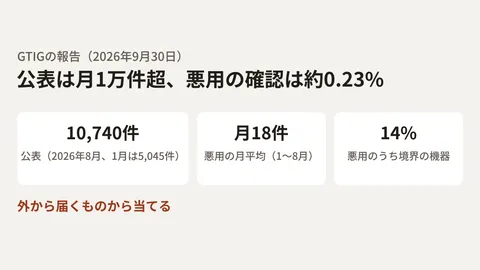
We covered how to prioritize patches as the number of vulnerabilities grows in our article on GTIG's statistics, and how to handle AI-generated fixes in our article on CodeMender.
What we have not verified
- Anthropic's current policy page (updated March 6, 2026) still states 90 days as of November 20. Please check the full text of the new policy once the revised page is published.
- As of November 20, the dashboard where reports are published (red.anthropic.com) was last updated on November 2, and its content predates the announcement. This article does not include the number or content of published reports.
On November 18, 2026, we checked Anthropic's announcement (November 16, 2026) and the current policy page. On November 20, we reopened both pages to confirm they had not changed, and also checked the dashboard, the OSS Scanner announcement, and the Claude for Open Source Program page (all based on documentation research).
GleamHub's development, AI, and automation consultations cover building dependency update procedures and reviewing maintenance structures. Please reach out via our contact form.